Endocrine research · Research file
Ipamorelin
A source-linked research file on ipamorelin's discovery, ghrelin-receptor context, foundational experimental models, comparative interpretation, and evidence boundaries.
Five linked editorial lenses · research context only · sources linked below

The foundational 1998 report introduced ipamorelin through a peptide-development program and characterized its endocrine activity in experimental models. That discovery paper is the best starting point for the compound's identity and the specific assays behind its early research profile.
The name alone does not define the exact material used in a later experiment. When comparing papers, check the compound characterization, model, route used in the protocol, sampling schedule, and measured endpoint in the original methods.
- Class described in the foundational paper: synthetic growth-hormone secretagogue
- Original characterization: laboratory and animal-model experiments
- Keep the tested material and experimental protocol attached to each result
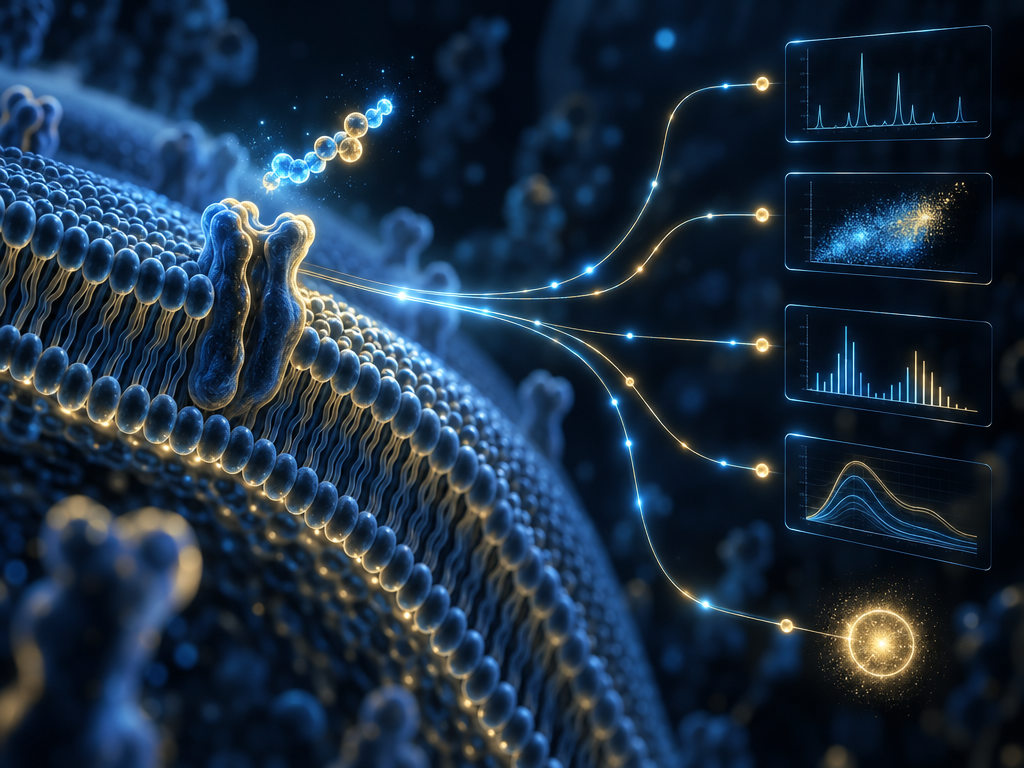
The 1998 report examined growth-hormone release and evaluated other pituitary or adrenal hormones in its experimental systems. A later receptor-pharmacology review provides broader context for the ghrelin-receptor family. These are related but distinct evidence layers: receptor classification should not be mistaken for a direct measurement of every downstream event in the discovery experiments.
When reading a pathway diagram, separate the receptor-level framework from the endpoints the cited experiment actually assayed. A measured hormone concentration does not, on its own, resolve every intermediate signaling step.
- Trace each mechanism statement to the source that supports it
- Separate receptor-family context from directly measured endpoints
- Treat diagrams as explanatory models unless the source directly tests each step

Raun and colleagues reported experiments involving primary rat pituitary cells and conscious swine, assessing growth-hormone release and selectivity across other hormonal measurements. The model and assay determine what these observations can establish; they should be stated alongside any summary of the paper.
A later rat study examined longitudinal bone growth, representing a different model and endpoint from acute endocrine-release experiments. It should be read as a separate evidence unit, not as confirmation of an outcome beyond the study's own design.
- 1998 report: pituitary-cell and swine experimental models
- Endpoints include measured endocrine responses
- Later rat work examined a distinct skeletal-growth endpoint

The discovery paper's selectivity observations belong to its methods, comparators, and measured hormones. Differences in species, assay systems, sampling, and study design can change what a cross-paper comparison means. Use direct comparisons only when the protocol actually places the relevant alternatives in aligned conditions.
A second study that examines a different endpoint can extend the research questions without establishing that the compounds or findings are interchangeable. Keep within-study observations distinct from indirect comparisons and proposed mechanisms.
- Check which comparator was actually used
- Align model, assay, and endpoint before comparing studies
- Do not treat separate studies as a direct head-to-head test

The primary sources linked here address specific laboratory or animal-model questions. They do not, by themselves, establish long-term outcomes, a disease-specific effect, or conclusions beyond their tested conditions. The receptor review is secondary context and should not be substituted for primary data.
Evidence limits are part of the record: model relevance, assay scope, follow-up, compound characterization, and independent replication all shape interpretation. Read the full papers and distinguish measured results from later summaries or mechanistic proposals.
- Keep preclinical observations within the model and endpoint studied
- Do not convert an endocrine biomarker into an unmeasured outcome
- Treat later review explanations as interpretation, not new primary results
Reading the source record
Follow each link to the original methods, endpoints, and limitations. This editorial summary is not a substitute for the source paper; interpretations should remain within the tested design and evidence scope.