Research blend · Research file
KLOW
A source-linked five-part research file on KLOW’s listed components, the separate component literature, and the limits of extrapolating those findings to the blend.
Five linked editorial lenses · research context only · sources linked below

Each named ingredient has a separate chemical identity and a distinct literature. The name KLOW does not, by itself, establish a standardized research formulation across suppliers, lots, or publications. The precise material and its documentation should be checked in the record being evaluated.
This newly generated editorial illustration is conceptual only. It is not an experimentally resolved structure, blend assay, or evidence that the components interact.
- Catalog-listed components: KPV, GHK-Cu, BPC-157, and TB-500
- A blend label is not a substitute for batch-specific identity documentation
- No conclusion about combined activity follows from ingredient names alone
Source file
- Getting et al. · Dissection of the anti-inflammatory effect of the core and C-terminal (KPV) alpha-melanocyte-stimulating hormone peptides · Journal of Pharmacology and Experimental Therapeutics (2003) ↗
- Maquart et al. · Stimulation of collagen synthesis in fibroblast cultures by the tripeptide-copper complex glycyl-L-histidyl-L-lysine-Cu2+ · FEBS Letters (1988) ↗
- Guan et al. · Gastric pentadecapeptide BPC 157 accelerates healing of transected rat Achilles tendon and in vitro stimulates tendocytes growth · Journal of Orthopaedic Research (2003) ↗
- U.S. FDA · TB-500 identity and nomenclature briefing document ↗

KPV is described in the cited literature as the C-terminal tripeptide sequence of alpha-melanocyte-stimulating hormone and has been examined in defined inflammatory research models. GHK-Cu has been studied in copper-coordination and fibroblast-culture contexts. BPC-157 and thymosin-beta-4-related materials have their own separate experimental and analytical records.
These component findings cannot be merged into a claim that the KLOW blend has a confirmed target, pathway, interaction, or combined effect. A blend-specific experiment would need to test the exact preparation and measure the stated question directly.
- Separate proposed mechanisms from directly measured endpoints
- Check whether a source tested a component or the complete blend
- Do not infer synergy or pathway convergence from parallel component literature
Source file
- Getting et al. · Dissection of the anti-inflammatory effect of the core and C-terminal (KPV) alpha-melanocyte-stimulating hormone peptides · Journal of Pharmacology and Experimental Therapeutics (2003) ↗
- Dalmasso et al. · Melanocortin-derived tripeptide KPV has anti-inflammatory potential in murine models of inflammatory bowel disease · Inflammatory Bowel Diseases (2008) ↗
- Maquart et al. · Stimulation of collagen synthesis in fibroblast cultures by the tripeptide-copper complex glycyl-L-histidyl-L-lysine-Cu2+ · FEBS Letters (1988) ↗
- Pickart et al. · GHK peptide as a natural modulator of multiple cellular pathways in skin regeneration · BioMed Research International (2015) ↗
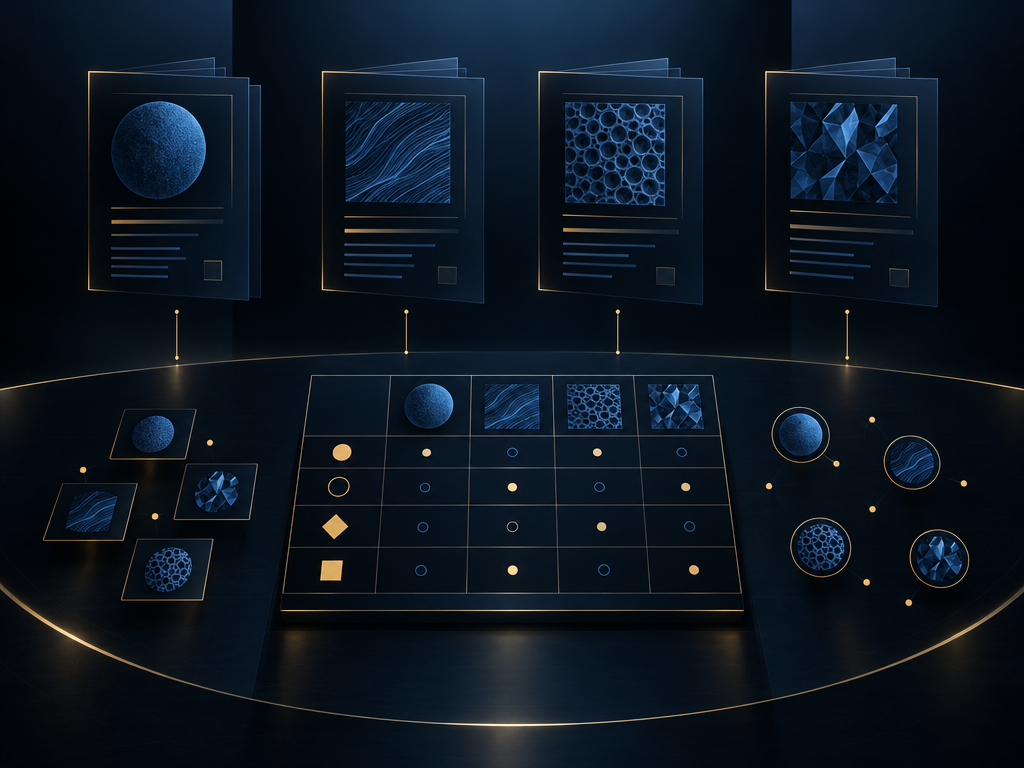
The cited KPV papers examine the tripeptide in specific experimental contexts. The GHK-Cu paper reports a fibroblast-culture study with collagen synthesis as a measured endpoint. The BPC-157 paper concerns a rat tendon model and an in-vitro tendocyte assay. TB-500-related analytical sources address identity or detection rather than establishing effects of the four-component combination.
For each source, record the material tested, model, comparator, method, endpoint, and limitations. A result from one component or model should not be represented as a finding about the complete blend.
- Component-specific studies are not KLOW blend trials
- Distinguish analytical identity, cell assays, and animal-model observations
- Trace review statements back to the original study and its methods
Source file
- Dalmasso et al. · Melanocortin-derived tripeptide KPV has anti-inflammatory potential in murine models of inflammatory bowel disease · Inflammatory Bowel Diseases (2008) ↗
- Maquart et al. · Stimulation of collagen synthesis in fibroblast cultures by the tripeptide-copper complex glycyl-L-histidyl-L-lysine-Cu2+ · FEBS Letters (1988) ↗
- Guan et al. · Gastric pentadecapeptide BPC 157 accelerates healing of transected rat Achilles tendon and in vitro stimulates tendocytes growth · Journal of Orthopaedic Research (2003) ↗
- Ho et al. · LC-MS analysis of TB-500 · Journal of Chromatography A (2012) ↗

This newly generated comparison illustration is conceptual only. It is not a head-to-head experiment, a product-composition analysis, or evidence that one named formulation has a particular mechanism.
A meaningful blend-level comparison would require a defined formulation, suitable controls, and measurements designed to distinguish individual-component effects from the combination. Until such evidence is available, comparisons should remain at the level of separately sourced component literature and explicit evidence limits.
- A visual comparison is not a study result
- Separate source studies do not establish additive or synergistic effects
- Formulation, controls, and endpoints must be explicit for blend-level inference
Source file
- Getting et al. · Dissection of the anti-inflammatory effect of the core and C-terminal (KPV) alpha-melanocyte-stimulating hormone peptides · Journal of Pharmacology and Experimental Therapeutics (2003) ↗
- Maquart et al. · Stimulation of collagen synthesis in fibroblast cultures by the tripeptide-copper complex glycyl-L-histidyl-L-lysine-Cu2+ · FEBS Letters (1988) ↗
- Guan et al. · Gastric pentadecapeptide BPC 157 accelerates healing of transected rat Achilles tendon and in vitro stimulates tendocytes growth · Journal of Orthopaedic Research (2003) ↗
- U.S. FDA · TB-500 identity and nomenclature briefing document ↗

In the source search for this file, no peer-reviewed primary study directly testing the exact four-component KLOW formulation was identified. That is a limit of the located record, not proof that no such work could ever exist. The linked papers below provide component-specific context only.
Open questions include how a particular blend is defined and characterized, whether its ingredients were tested together in a controlled design, and what outcomes were directly measured. Until those records are available, avoid attributing a component's result to KLOW or describing a combined mechanism as established.
- No blend-level conclusion is drawn from separate component studies
- Verify exact formulation and analytical characterization in any future source
- Evidence scope, study model, and replication remain essential reading points
Source file
- Dalmasso et al. · Melanocortin-derived tripeptide KPV has anti-inflammatory potential in murine models of inflammatory bowel disease · Inflammatory Bowel Diseases (2008) ↗
- Pickart et al. · GHK peptide as a natural modulator of multiple cellular pathways in skin regeneration · BioMed Research International (2015) ↗
- Guan et al. · Gastric pentadecapeptide BPC 157 accelerates healing of transected rat Achilles tendon and in vitro stimulates tendocytes growth · Journal of Orthopaedic Research (2003) ↗
- Ho et al. · LC-MS analysis of TB-500 · Journal of Chromatography A (2012) ↗
Reading the source record
Follow each link to the original methods, endpoints, and limitations. This editorial summary is not a substitute for the source paper; interpretations should remain within the tested design and evidence scope.